A mapped network drive cannot reconnect after sign-in
What to do first
A mapped network drive cannot reconnect after sign-in. Drive reconnection may run before Wi-Fi or VPN is ready, saved credentials may be stale, or the share name may have changed. Record the current state before changing it, use only the supported Windows path described below, and verify the same operation again after any required restart.
This is a general troubleshooting guide, not an announcement of a current outage.
Affected products and symptoms
- Product
- Windows mapped drives
- Versions and conditions
- Windows 11 (confirm the edition and hardware requirements for the feature)
- Error codes and identifiers
- 0x80070043
Symptoms
- A mapped network drive cannot reconnect after sign-in.
- The same condition can persist after a retry or restart.
Causes and conditions
Drive reconnection may run before Wi-Fi or VPN is ready, saved credentials may be stale, or the share name may have changed.
Before you start
- Save open documents and allow time for a Windows restart if required.
- Run administrative actions only on a personally managed PC or with administrator approval.
- Save the diagnostic command output so the before and after states can be compared.
- The Z: drive in commands is an example. Replace it with the affected mapped drive letter, and replace server and share with the actual UNC destination. Disconnecting a drive can interrupt open files.
Precautions
- Do not bulk-delete registry entries, system folders, credentials, or storage metadata.
- Do not run unofficial scripts or unknown drivers with administrator rights.
Tools and official pages used in this guide
Check the official requirements, interface names, and limitations for this step.
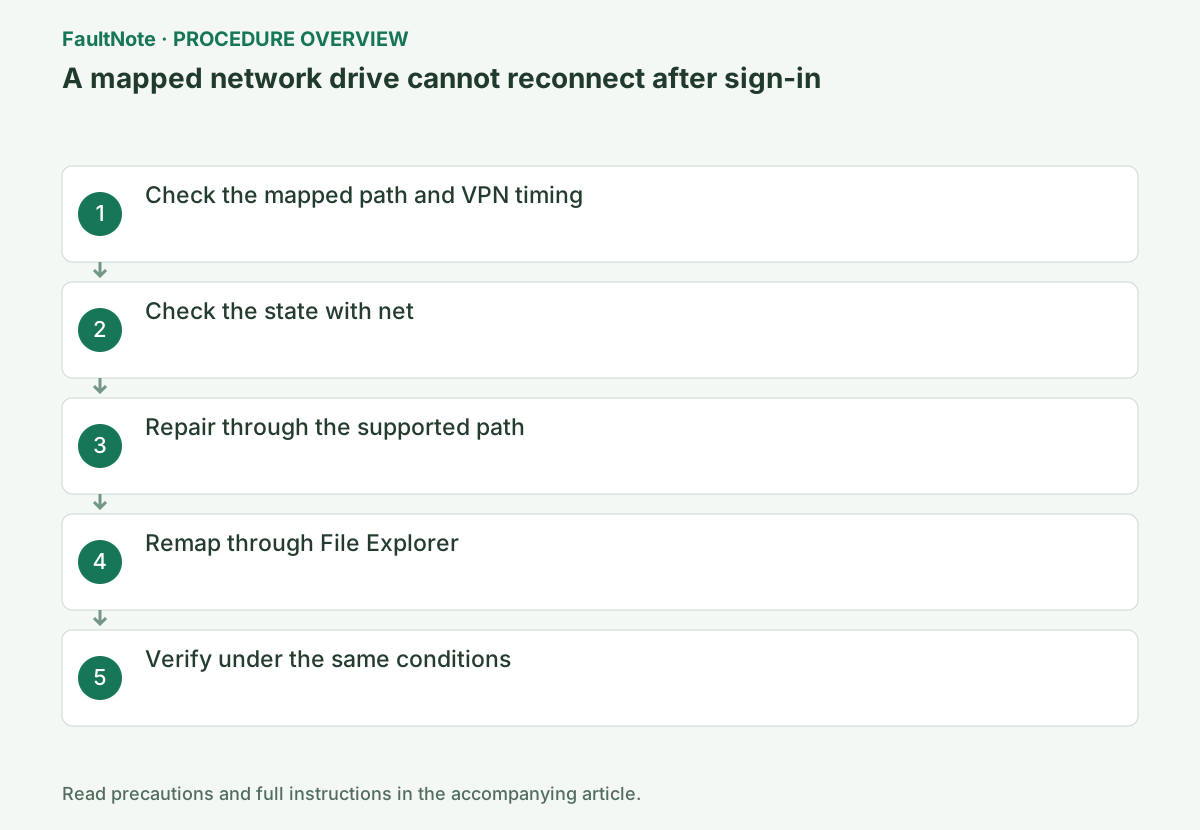
Step-by-step instructions
In File Explorer > This PC, record the drive letter and destination. If it fails only immediately after signing in, connect the required business VPN and reopen the drive. If it then works, you do not need to delete and recreate the mapping.
Compare sign-in, post-VPN and resume failures separately. Record icon-warning time and actual access time; later success may reflect connectivity readiness. Separate server unavailability from a stale local mapping. Another share success alone does not prove the target server is healthy.
Before deleting a mapping because of a red icon at sign-in, open it once. If it opens, investigate the display state. For VPN-dependent shares, retest after the VPN connects; failure before connection does not establish damaged credentials.
List current mappings and record the drive letter, UNC path, and persistence state.
Match the current drive letter, UNC path, and state. Operate only on the row for the intended server and share; leave other sessions intact.
Save both drive letter and UNC path before deletion. Close applications and files using the drive after saving work. Replace example letters carefully, never delete all mappings, and recreate only the affected mapping after confirming access to the approved UNC path.
net useAfter Wi-Fi or the required VPN is connected, remove only the stale mapping and map the same drive letter to the verified \\server\\share path with Reconnect at sign-in enabled.
Match the current drive letter, UNC path, and state. Operate only on the row for the intended server and share; leave other sessions intact.
An elevated terminal inventory is not equivalent to ordinary Explorer. Test the regular user with matching elevation and application. If only a business application fails, ask which account or service runs it. Permanent elevation is not a mapping diagnosis. Record UNC success versus drive-letter failure and check application requirements.
net use Z: /deleteOfficial links for this step
- Map a network drive in Windows
Check the official requirements, interface names, and limitations for this step.
- Map a network drive in Windows
Only if the destination changed, close files on the share, right-click the affected drive and choose Disconnect. Under This PC, choose … > Map network drive, select the original letter and correct UNC, and enable Reconnect at sign-in. Check that the letter is not already assigned elsewhere.
In File Explorer open This PC > More > Map network drive, then enter the previous drive letter and UNC. Connect required VPN first and select Reconnect at sign-in only when the share is reachable in that startup order.
Explorer and an elevated terminal may show different drive mappings. Check ordinary Explorer under the regular user and verify the UNC path. Before changing an existing mapping, record its letter and path and close files on that share; modify only the affected mapping.
Run net use Z: \\server\share /persistent:yes and repeat the original operation once under the same conditions. If it succeeds, verify again after a restart and record the setting that changed.
Match the current drive letter, UNC path, and state. Operate only on the row for the intended server and share; leave other sessions intact.
After remapping, establish required connectivity and read the necessary file. Retest under the same conditions after sign-out or reboot. Readiness timing is not repaired solely by new credentials. Separate repeated password prompts from an unreachable UNC path and report letter, path, user, VPN state and time while retaining the original mapping record.
net use Z: \\server\share /persistent:yes
Check the result
- The regular user opens the mapped drive after required connectivity, such as VPN, is available
- The verification command reports the expected enabled, healthy, or connected state.
- The result remains correct after a Windows restart and no new matching critical event appears.
If the problem continues
- If the UNC path also fails, investigate server access before remapping
- If hardware requirements, organization policy, or server settings are responsible, ask the owner to make the change instead of bypassing it on the client.
Scope of this guide
Troubleshooting guide — Restore the feature so it starts, connects, or completes normally and passes the same verification after a Windows restart.
Frequently asked questions
Why does a red X disappear after I open the drive?
Sign-in reconnection may run before the network is ready. If it opens after VPN connects, investigate startup timing before remapping.
Must I change the drive letter?
Only if that letter conflicts with a local drive or another mapping.
Should I delete a mapping with a red icon if it opens normally?
First record icon timing and connection readiness if access works. A warning before networking is ready is not proof of persistent mapping failure. Keep the original letter and UNC path before any deletion.
Official sources and dates
Source publication or resolution date: Not specified. Sources checked: 2026-10-13. The check date is not the date the problem first occurred. Interface labels can vary between versions and display languages.
Related troubleshooting guides
Windows errors and troubleshooting →
- Laptop is slow only on battery: check the power mode, energy saver and the maker's cooling mode in that order
- A driver can't load on this device: what memory integrity is blocking, and the choices that leaves
- Printer outputs blank pages after an ink or toner change: packing material, seating, nozzle check and the new-supply test
- A print job remains stuck on Deleting